

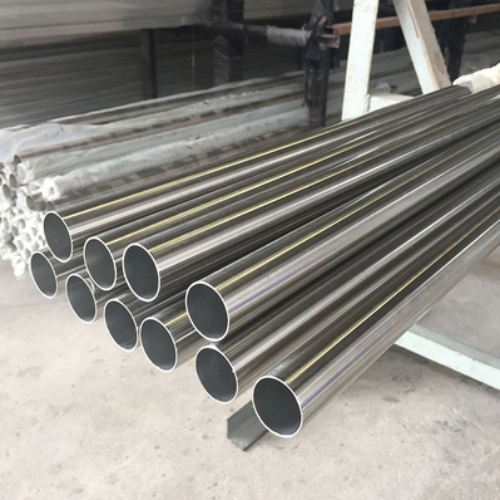
We can offer Stainless Steel Pipe products, including Stainless Steel Capillary Pipe, Stainless Steel Precision Pipe, Stainless Steel Seamless Pipe, Stainless Steel Sanitary Pipe, Thick Wall Stainless Steel Pipe, Stainless Steel Bright Tube, Stainless Steel Needle Tube, Stainless Steel Fine Tube, Stainless Steel Coil, Welded Stainless Steel Pipe, Stainless Steel Industrial Pipe, Stainless Steel Round Tube, Medical Stainless Steel Tube, Stainless Steel Thin Wall Tube, Stainless Steel Shaped Tube, Stainless Steel Elbow, Stainless Steel Snake Bone Tube, Stainless Steel Decorative Tube, Stainless Steel Electronic Cigarette Tube, Stainless Steel Tube Processing, Copper Pipe, Titanium Alloy Tube, Aluminum Tube, and so on.
Compared with stainless steel for industrial structure, medical stainless steel is required to maintain excellent corrosion resistance in the human body to reduce the dissolution of metal ions, avoid local corrosion such as intergranular corrosion and stress corrosion, and prevent the failure and fracture of implanted devices. To ensure the safety of implantable devices, its chemical composition requirements are relatively stricter.
In medical stainless steel, especially stainless steel for implantation, the content of alloying elements such as Ni and Cr is higher than that of ordinary stainless steel (usually reaching the upper limit of ordinary stainless steel), and the content of impurity elements such as S and P is lower than that of ordinary stainless steel. The sizes of medium and non-metallic inclusions should be smaller than grade 115 (fine series) and grade 1 (coarse series) respectively, and there are no special requirements for inclusions in ordinary industrial stainless steel standards.In order to avoid intergranular corrosion of medical stainless steel, it is also required to have a lower C content, and in the early days, it was stipulated that the C content should not be higher than two levels (mass fraction) of 0108% and 0103%. With the advancement of metallurgical technology and the improvement of application requirements, in the domestic and foreign standards for medical stainless steel revised in recent years, all require that the C content in steel is not higher than 0.103% (such as ASTMF138-03, ASTMF139-03, ISO5832-1- 2007, GB4234-2003).
The strength and hardness of 316L or 317L austenitic stainless steel commonly used in medical stainless steel are low in solid solution state, but its strength and hardness can be improved by cold working deformation. Therefore, the stainless steel for surgical implants used clinically is usually in a cold working state (the amount of cold working deformation is about 20%) to meet the high strength and high hardness required by implanted devices, but the cold working state increases the stress corrosion and corrosion fatigue damage of medical stainless steel. Sensitivity.
Medical stainless steel has become a widely used medical implant material and medical tool material due to its good biocompatibility, good mechanical properties, excellent resistance to body fluid corrosion, and good processability. Medical stainless steel is widely used to make various artificial joints and internal fixation devices for fractures, such as various artificial hip joints, knee joints, shoulder joints, elbow joints, wrist joints, ankle joints and finger joints, various specifications of osteotomy connectors , Compression plates, goose skull screws, spinal screws, bone traction wires, artificial vertebral bodies, etc., as well as skull plates, artificial vertebral bodies, etc.
In dentistry, medical stainless steel is widely used in inlays, orthodontics, root implants and auxiliary devices, such as various crowns, bridges, fixed brackets, snap rings, bases, etc. Orthopedic wire, denture and jaw defect repair, etc.
In recent years, the demand for high-quality and low-cost medical stainless steel wires, bars, special plates for orthopaedics, screws and other semi-finished products in China's medical device industry has increased significantly, reaching more than a few hundred tons every year. At present, there are only two kinds of medical implant stainless steel standards in China, namely GB4234 (basically equivalent to ISO5832-1 and ASTMF138) and YY060519-2007 (equivalent to IS05832-9, corresponding to ASTMF1586), the standardization of medical stainless steel is far behind the United States ( It currently revised a total of 6 types of stainless steel for surgical implants). Therefore, the standard revision of new medical stainless steel is also an important part of the research and development of medical stainless steel in my country in the future.